Start with the condition of the vehicle
A light layer of road dust needs a very different approach from winter grime, dried mud, tree sap or months of neglected interior dirt. Before comparing package names, decide whether the goal is simply to make the vehicle presentable, to remove a specific contaminant, or to restore and protect surfaces.
Routine washing is mainly about safely removing loose and lightly bonded dirt. Detailing goes further by addressing contamination, stains, oxidation, swirls and protection. Paying for a more elaborate service is not automatically better if the vehicle only needs maintenance cleaning.
Self-service, automatic, hand wash or detailing?
Self-service bays
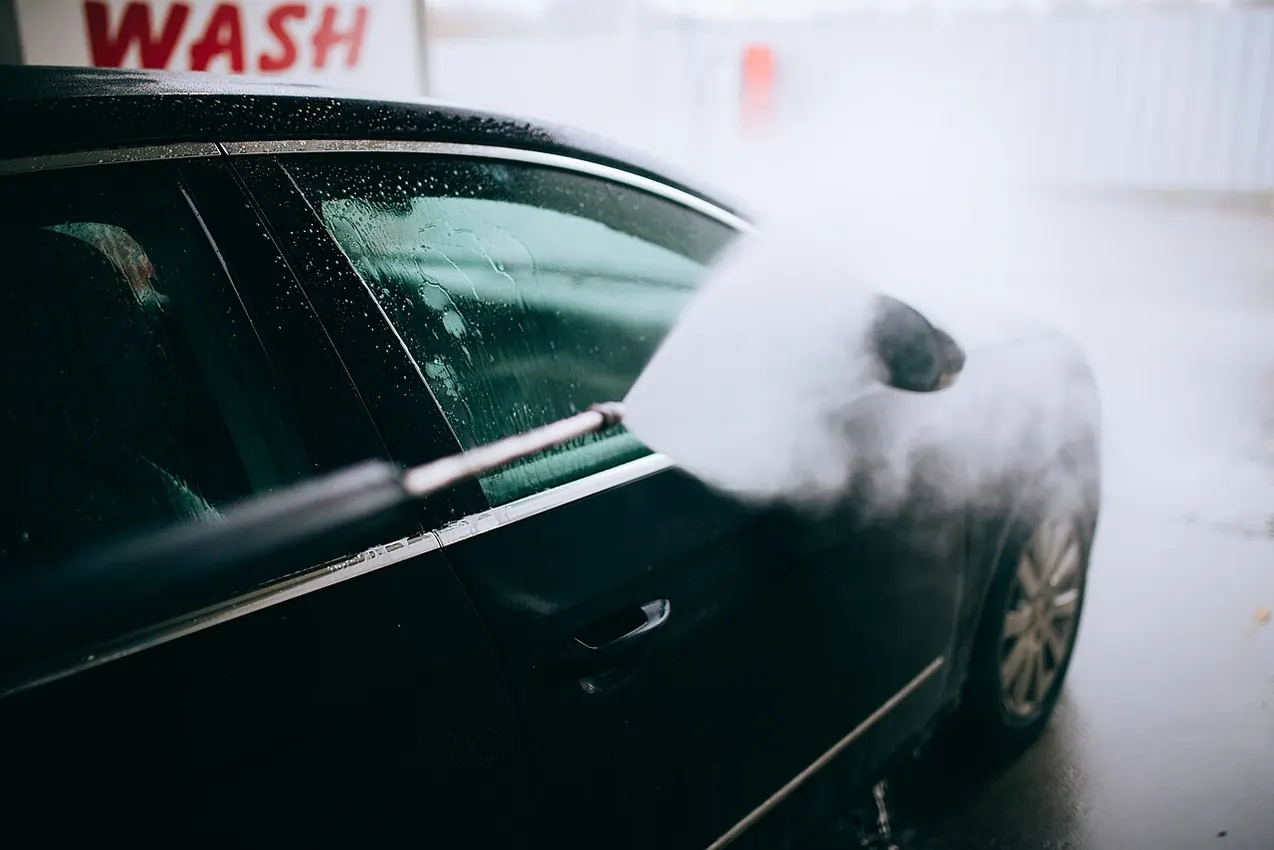
Self-service washing gives the driver direct control over where water and chemicals are applied. It can be particularly useful for wheels, wheel wells, mud and targeted pre-rinsing. Good technique matters: high pressure should not be held extremely close to damaged paint, loose trim, seals or delicate accessories.
Automatic systems
Automatic washes trade some control for speed. Touchless systems rely more heavily on water pressure and chemistry, while friction systems physically contact the vehicle. Either may be suitable for routine cleaning, but results vary with equipment, maintenance and the condition of the vehicle.
Hand washing
Hand washing can provide precise control and careful treatment of trim, wheels and painted surfaces. It is most useful when clean wash media, adequate lubrication and a sensible top-to-bottom process are used. Reusing dirty towels or sponges can move grit across the finish.
Professional detailing
Detailing becomes more relevant when the goal includes paint decontamination, machine polishing, coating or sealant application, upholstery extraction, odour treatment or other corrective work.
Questions worth asking a provider
- Is the wash touchless, friction-based, hand wash or a combination?
- Does the package include wheels, wheel wells, underbody or drying?
- Are interior services included or priced separately?
- What products or protection are applied after washing?
- Are oversized vehicles, roof racks or aftermarket accessories restricted?
Frequently asked questions
How often should a vehicle be washed?
There is no universal schedule. Weather, parking, mileage, road conditions and contamination matter more than a fixed calendar interval.
Is touchless always safer for paint?
Touchless washing avoids brushes contacting the paint, but cleaning still depends on chemical strength, pressure, dwell time and the condition of the finish.
When is detailing worth considering?
Consider detailing when routine washing no longer addresses embedded contamination, stains, paint defects, odours or the level of protection you want.